On , the European Space Agency described a test campaign preparing Ariane 6 for its first launch. ESA said the campaign was intended to lead to that launch in 2024, with work spread across Europe, from engine testing in Germany to operations at Europe’s Spaceport in French Guiana.
The campaign covered the rocket and its ground systems
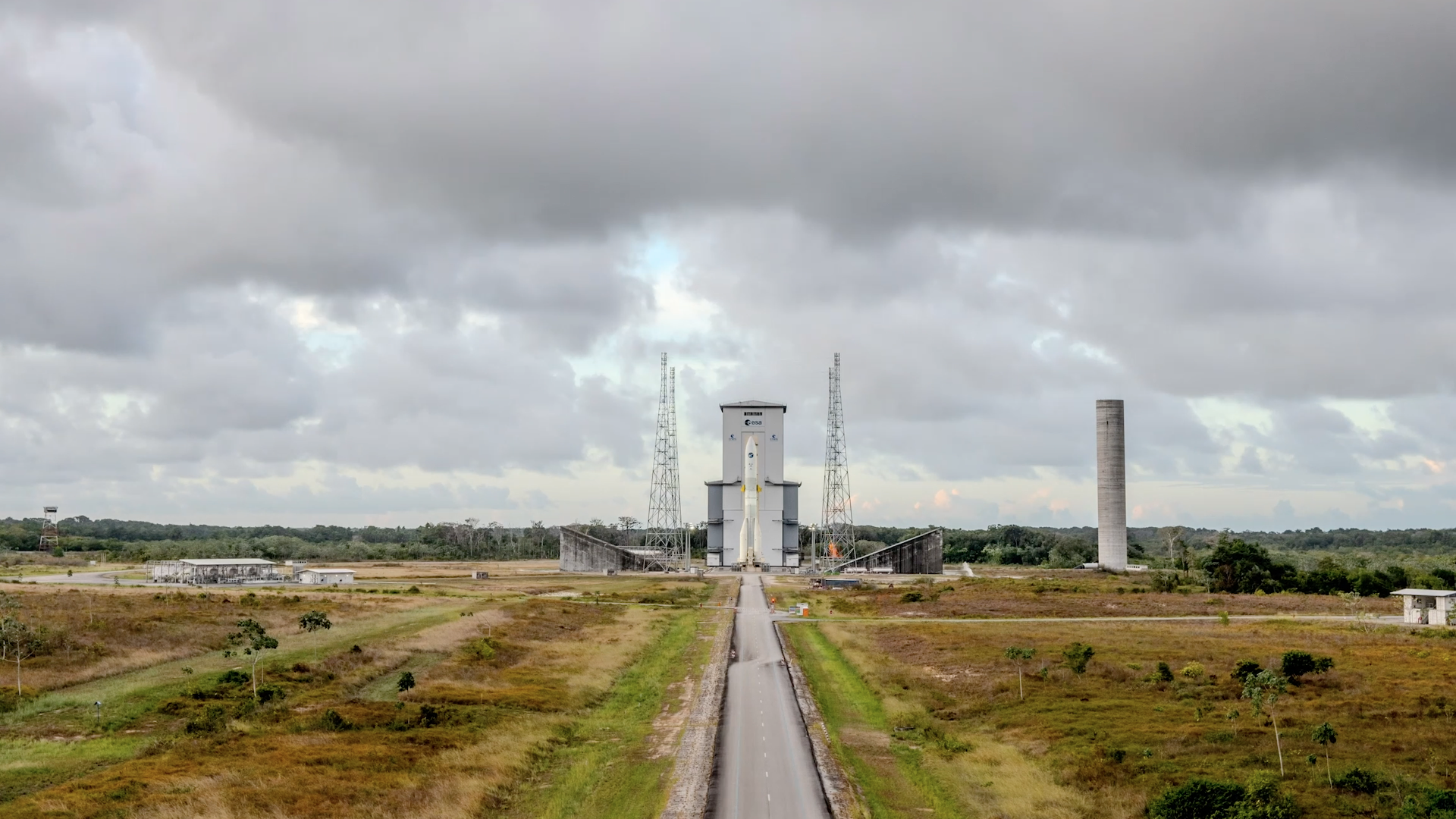
At the spaceport, the mobile gantry had been rolled back from the launch pad during the summer, exposing the rocket to the elements. That placed Ariane 6 in an active phase of pad preparation, while teams continued checks involving both the launch site and the vehicle itself.
The Vulcain 2.1 engine on Ariane 6’s main stage had completed a series of hot-fire tests. Those tests covered the rocket and the complete ground system together, making the interface between vehicle hardware and launch infrastructure part of the campaign rather than leaving it to a separate final check.
Teams also rehearsed filling the tanks and running countdowns. The campaign included tests of the water system designed to damp vibrations, adding another launch-pad function to the preparations. These activities rehearsed the conditions and procedures that would have to work in sequence on launch day, from preparing the vehicle to operating the pad systems.
Upper-stage testing continued in Germany
The main stage was not the only propulsion hardware still under examination. Testing continued on the restartable Vinci engine fitted to the upper stage, as well as on the Auxiliary Power Unit, or APU. Both sets of tests were taking place at the DLR test site in Lampoldshausen, Germany.
The distribution of work explains why the campaign involved teams across Europe. The launch site in French Guiana was handling pad and ground-system activities, while Lampoldshausen remained focused on upper-stage propulsion and support equipment. Ariane 6’s preparation therefore involved several connected parts of the launch system rather than a single test location.
What the December update established
ESA said the tests would soon be complete and that Ariane 6 would then take flight. The update showed a programme moving toward its planned first launch, but it did not provide an exact launch date or a launch result. Readiness work and a confirmed flight were therefore separate milestones: the former was described in detail, while the supplied update stopped before reporting the latter.
For readers following Ariane 6, the concrete development was the breadth of the preparation. Engine firings, tank-filling and countdown rehearsals, vibration damping, upper-stage engine tests and APU work were all part of one campaign. Its progress mattered because the first launch depended on the vehicle and the ground system being prepared together. The December update supported the 2024 target, but the final schedule was not specified in the information available here.