NASA has scheduled a media conference with SpaceX Crew-12 for Wednesday, September 16, 2026, at 2:45 p.m. EDT. The event will take place from the International Space Station as the crew prepares to leave orbit, so the key points are the briefing itself, the research discussed and the conditions that still govern the journey home.
The date confirms when NASA plans to discuss the mission. It does not confirm that Crew-12 has already departed, returned to Earth or completed the sequence leading to landing.
Put the briefing on your calendar
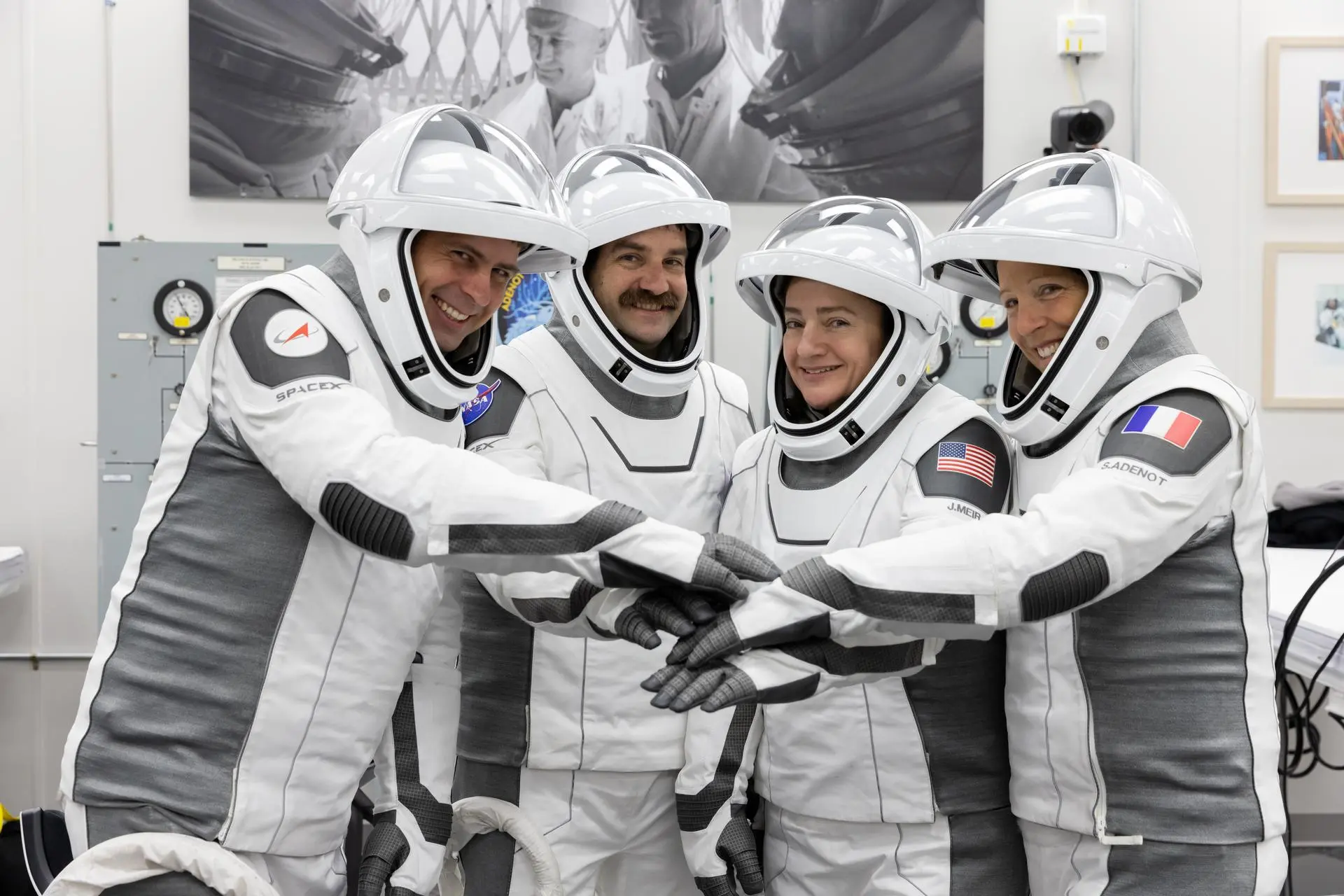
NASA’s September 11 media advisory identifies the four astronauts expected to participate: NASA astronauts Jessica Meir and Jack Hathaway, ESA astronaut Sophie Adenot, and Roscosmos cosmonaut Andrey Fedyaev.
- Mark Wednesday, September 16, at 2:45 p.m. EDT.
- Keep the time zone attached to the appointment when comparing it with your own schedule.
- Read the date as the time of the media briefing, not as a confirmed return date.
This distinction keeps the public event separate from the operational timeline. The crew can discuss the transition out of orbit while the departure remains dependent on later milestones.
Media questions require advance notice
Media organizations that want to participate must contact the Johnson Space Center newsroom in Houston by 5 p.m. EDT on Tuesday, September 15. NASA lists the phone number as 281-483-5111 and the email address as jsccommu@mail.nasa.gov.
Treat that deadline as the practical cutoff for a participation request. Representatives who want to ask questions must also connect to the conference no later than 10 minutes before it begins.
These instructions describe the route for media participation. They do not establish a general public viewing arrangement, so other readers should use NASA’s official updates for confirmed information rather than assume that the conference will be available through another channel.
Read the research by subject
Crew-12 joined the crews of Expeditions 74 and 75 aboard the International Space Station and contributed to hundreds of experiments. That figure provides the scale of the mission, but the individual research areas matter more when following the astronauts’ comments.
One investigation examined bacteria that cause pneumonia, with the stated aim of improving cardiovascular treatments. Another studied the on-demand production of intravenous fluids for future space missions. A third examined how physical characteristics can influence blood flow during spaceflight.
These are separate research questions involving treatment development, medical supply production and the body’s response to the flight environment. NASA’s announcement identifies the subjects and intended relevance of the studies; it does not provide final results from them.
Keep the blood-sample work separate from its future analysis
NASA’s International Space Station update from September 11 adds a more specific account of the crew’s work during a light-duty day. Expedition 75 studied the effect of microgravity on exercise while also handling cargo transfer and laboratory maintenance aboard the station.
During that work, Jack Hathaway collected and processed blood samples in the Columbus laboratory with Sophie Adenot’s assistance. The samples were preserved for storage and will be analyzed after they return to Earth. Scientists will use them to study electrical stimulation of muscles as a possible way to address space-related muscle loss.
The confirmed sequence ends with collection, processing and preservation. The analysis comes later, so the sample work should not be presented as a treatment result or proof that electrical stimulation has solved muscle loss in space.
Follow the return in the right order
- Check the September 16 briefing time and the September 15 media-participation deadline.
- Note which astronaut is speaking, while keeping each research topic tied to the information NASA provides.
- Watch for the next operational milestone: Crew-13’s arrival at the station.
- Place Crew-12’s departure after that arrival and the short handover period.
- Before treating the landing plan as settled, check whether mission teams have reviewed weather conditions at the offshore California landing sites.
The briefing, the handover and the splashdown are separate stages. Crew-13’s arrival affects the handover, while weather assessments affect the landing plan; none of those milestones is established simply by the September 16 conference.
What changes after the briefing
Crew-12 is moving toward the end of its station mission, and the astronauts are scheduled to discuss that transition with media. The research work also begins shifting from in-orbit operations toward analysis on Earth, particularly for the preserved blood samples.
The status of the findings does not change. The bacteria, intravenous-fluid, blood-flow and muscle-loss investigations remain research topics described by NASA, not confirmed medical outcomes. The departure timing likewise remains conditional on Crew-13’s arrival, the handover and suitable weather assessments for the landing sites.
For readers, the useful checkpoints are therefore straightforward: the September 16 conference, the crew’s account of its work, Crew-13’s arrival, the handover and the weather review before landing. Crew-12’s briefing connects station operations with research intended for future space missions and possible cardiovascular care, but the next concrete decision concerns when the crew can leave after those operational conditions are met.