
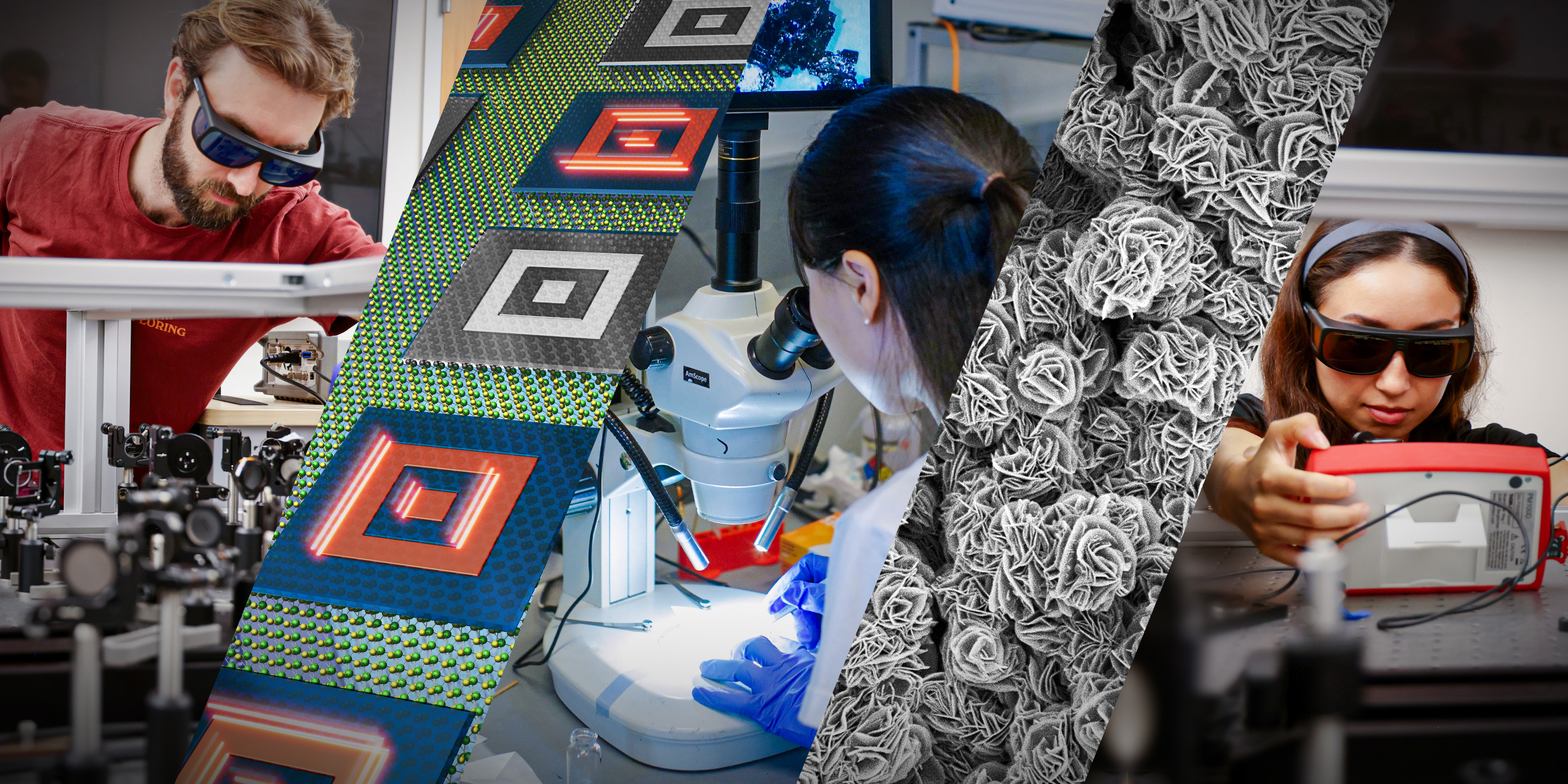
The U.S. National Science Foundation is investing $108 million in six Materials Research Science and Engineering Centers, creating a new wave of federally supported research into how matter can be designed, combined and controlled. The program spans fundamental science and possible applications in medicine, energy, manufacturing, electronics and space hardware.
Each center will receive $18 million over six years. The scale of the commitment matters because materials research often begins far from a finished product: researchers first need to understand how a material behaves at the molecular, atomic or nanoscale before they can determine whether it can solve a practical problem. NSF says the centers will combine experimental and theoretical work across a broad set of scientific frontiers.
From light and matter to medical imaging
One research direction will examine unusual materials in which light and matter effectively behave as hybrid particles. These systems could help scientists study and manipulate optical, electronic and quantum phenomena in ways that conventional materials cannot provide. The announcement does not promise a commercial device or a specific performance improvement, but it identifies hybrid quantum metamaterials as one of the areas the new centers will investigate.
Another center will focus on scintillators, materials that emit visible light when struck by X-rays. Scintillators are already important components in medical imaging systems. NSF says the researchers will explore new materials and ways to control light at the nanoscale, with the goal of making scintillators more sensitive. If successful, that line of research could support detailed images using less X-ray exposure, an especially relevant consideration for children who undergo repeated screening or treatment.
The distinction between a research objective and a demonstrated result is important here. The funding supports work intended to discover and develop new material properties; it is not an announcement that a new scanner, therapy or manufacturing process is ready for deployment. Results will depend on experiments, validation and the ability to reproduce the observed behavior.
AI laboratories and materials for a changing economy
NSF also lists autonomous, AI-based experimentation laboratories among the projects supported by the centers. These facilities are intended to help design new soft materials, including materials that could eventually be used for drug delivery and other medical therapies. In this context, artificial intelligence is part of the research process: it can help researchers explore combinations and experiments, while laboratory measurements remain necessary to determine whether a proposed material actually works.
Other research areas include hybrid quantum metamaterials and foundational work with potential applications in critical mineral extraction, biotechnology, microelectronics and advanced manufacturing. Taken together, the portfolio links questions that are often treated separately. A better understanding of how materials absorb, emit or transport energy can influence sensors and electronics; the same design principles may also inform industrial processes or instruments used in demanding environments.
That breadth is a defining feature of NSF’s Materials Research Science and Engineering Centers program. The agency says the centers have supported materials discoveries since the 1970s, when they were known as Materials Research Labs. Over time, research from the program has contributed to materials used in products ranging from dental fillings to rocket engines. The new awards extend that long-running model into areas where materials performance remains a limiting factor.
A national network, not six isolated laboratories
The six centers are based at universities in five states, with one located in a state participating in NSF’s Established Program to Stimulate Competitive Research. Their partners include more than twenty research institutions, technology companies and educational organizations, as well as Department of Energy national laboratories and the National Institute of Standards and Technology.
This structure gives the program two distinct purposes. The first is scientific: bringing researchers from different fields together around materials problems that cannot be solved by one discipline alone. The second is institutional: building research capacity and making advanced facilities, expertise and training available across a wider network.
NSF expects the investment to support more than 60 early-career researchers, over 150 graduate students and more than 250 undergraduates through education, mentorship and specialized training. That workforce element may be as important as any individual discovery. New materials require chemists, physicists, engineers, data scientists and technicians who can move between theory, fabrication and measurement.
The announcement therefore describes a research platform rather than a single breakthrough. The immediate output will be experiments, models, publications and trained scientists. The longer-term value will depend on which material properties can be reproduced, scaled and integrated into real systems. For now, NSF’s six-center investment marks a substantial expansion of the infrastructure needed to find out what matter can do when it is engineered with greater precision. The agency’s materials research overview provides additional context, while the official announcement sets out the scope of the awards and their planned research directions.