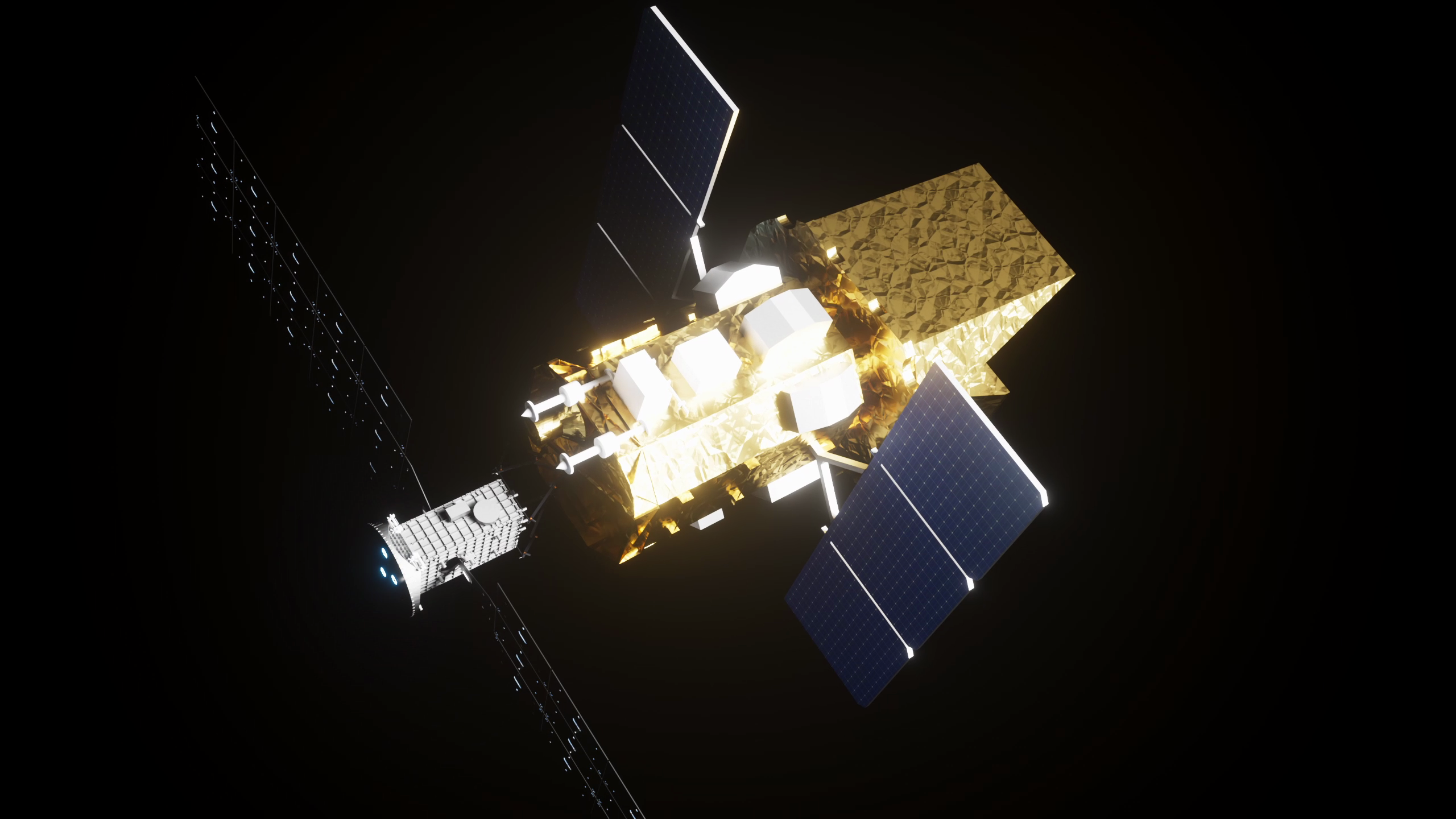
NASA says a critical step has been completed in an effort to extend the life of its Neil Gehrels Swift Observatory. In an August 11 report, NASA Science said Katalyst Space had uploaded a flight-software update that re-established attitude control on its LINK spacecraft, which is intended to raise Swift into a higher orbit.
The update is meaningful because LINK must control its orientation before it can safely approach, capture, and maneuver the aging observatory. It is not, however, the same as completing the orbit-raising operation. NASA described the next phase as a sequence of burns and maneuvers, with LINK performance to be evaluated at each stage.
What changed on LINK
According to NASA, the new attitude-control algorithms are designed to keep LINK stable using the spacecraft's remaining actuators. Attitude control refers to the ability to point and rotate a spacecraft, rather than to move it directly along its orbit. That distinction matters here: LINK needs a controlled orientation to align with Swift before any servicing maneuver can be attempted.
The wording of NASA's update also sets a clear boundary around what has been confirmed. The agency reported restored control of LINK, but it did not announce a completed capture, a successful orbit raise, or a final recovery of Swift. Those events remain future mission steps. NASA said Katalyst Space would continue working with the Swift team while assessing the spacecraft after each maneuver.
Why Swift's altitude matters
NASA reported that Swift was orbiting at about 216 miles, or 347 kilometers, when the update was published. The agency also said that an orbit-raising maneuver would become more difficult once the observatory falls below an average altitude of about 185 miles, or 300 kilometers. The figures show why timing and control are central to the operation: a spacecraft in low Earth orbit encounters the thin outer atmosphere, which gradually removes orbital energy through drag.
NASA's Swift team has already been using a new operating approach intended to reduce drag and slow the observatory's orbital decay. That work does not replace the planned boost, but it gives the mission more time to prepare and execute the servicing attempt. NASA has not published a target altitude for the completed operation in the August 11 update, so there is no basis for claiming that the observatory has reached a new operational orbit.
A science mission worth preserving
The Swift mission archive describes the Neil Gehrels Swift Observatory as a satellite that studies gamma-ray bursts, among the most powerful explosions in the universe, along with other cosmic objects and events. Its continued operation matters because these transient phenomena can appear and fade on short timescales, making an active space-based observatory an important part of how astronomers track them.
Swift is therefore more than the spacecraft being targeted by the servicing mission. It is an established scientific observatory whose remaining working systems can continue producing observations if its orbital environment is stabilized. The planned boost is aimed at preserving that capability, not at launching a new telescope or introducing a new consumer technology.
What remains unresolved
NASA's latest confirmed milestone is the restoration of LINK's attitude control. The next evidence to watch for is operational: further orbit-alignment maneuvers, a controlled approach, capture of Swift, and a successful orbit raise. NASA's August 11 report did not provide a completion date for those steps, and it did not say that the servicing spacecraft had already reached Swift.
This makes the update a genuine progress report rather than a final mission success announcement. It confirms that the recovery effort has moved beyond an earlier control problem, while leaving the most consequential actions still to be demonstrated in orbit. The official Swift archive remains the appropriate place to check for NASA's next status update.
Bottom line
NASA reports that LINK has regained the attitude control needed to continue preparing for a boost of the Swift observatory. The development improves the mission's prospects, but the orbit raise and spacecraft capture have not yet been confirmed. For now, the verified story is one of restored control and continued preparation, not a completed rescue.