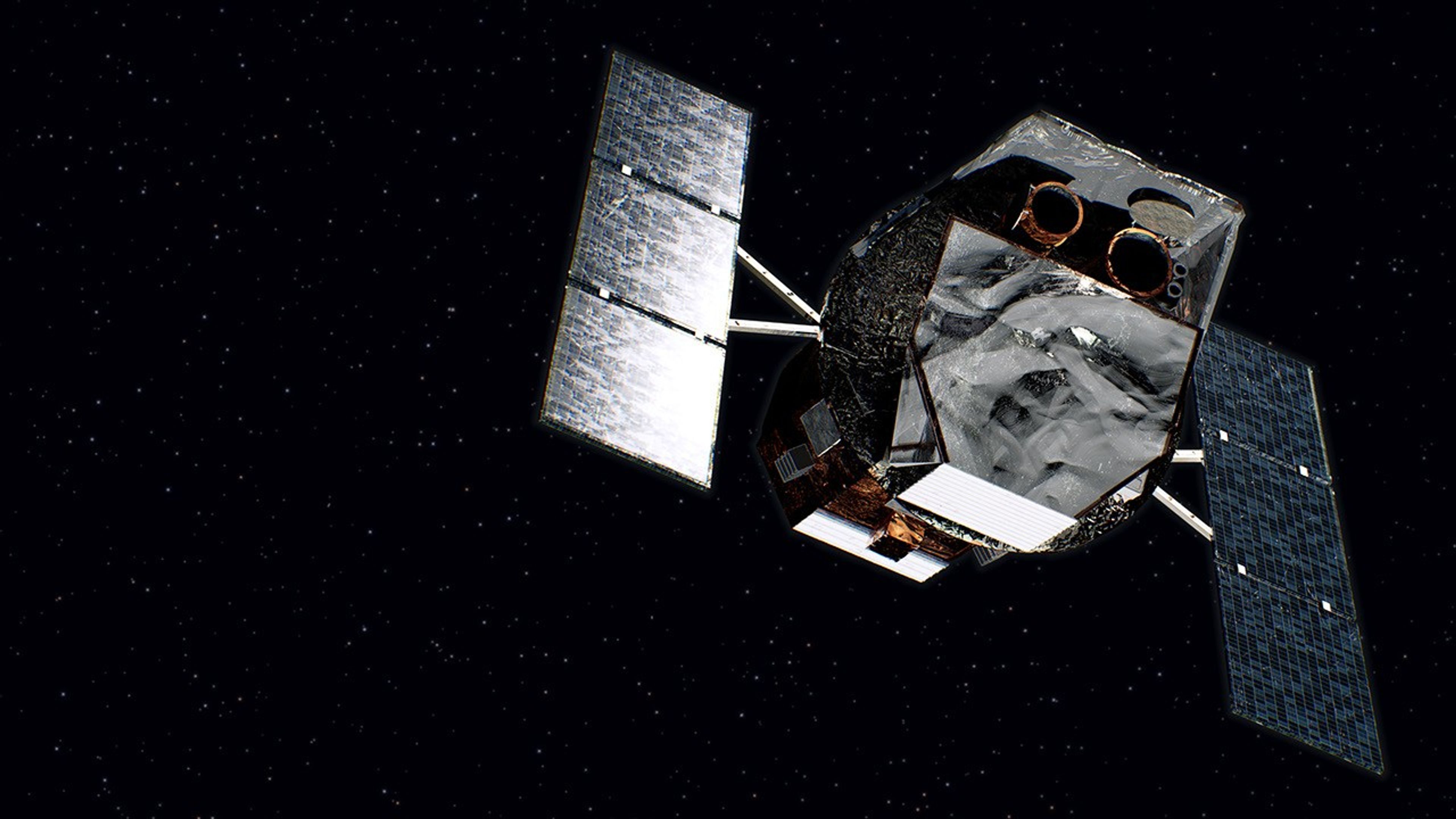
NASA reports that a robotic servicing mission intended to save the Neil Gehrels Swift Observatory has cleared a software milestone before the spacecraft begins its next approach manoeuvres. Katalyst Space successfully uploaded a flight-software update to its LINK spacecraft, whose new attitude-control algorithms are designed to keep the vehicle stable using the actuators that remain available. The update prepares LINK to continue its approach toward Swift; it is not yet a report that the two spacecraft have rendezvoused or that the observatory has been lifted.
A software step before the rendezvous
LINK must first maintain a reliable orientation while its operators prepare a sequence of orbital burns and manoeuvres. NASA says the Katalyst team will continue evaluating LINK’s performance at each stage as it aligns the spacecraft’s orbit with Swift. That makes the software update a significant operational checkpoint, but a deliberately limited one: the mission still has to complete its approach, establish contact, capture the observatory and then raise its orbit.
The newest report gives no completed capture, final altitude or claim that the boost has succeeded. Instead, it describes a spacecraft that is ready to continue the next phase of a carefully staged mission. The distinction matters because a servicing vehicle working near an uncrewed observatory has to manage its own position and orientation before it can attempt close-proximity operations.
Why Swift needs help
Swift has spent more than two decades in low Earth orbit, where even very thin atmospheric drag gradually lowers a spacecraft’s altitude. NASA says recent solar activity has accelerated that orbital decay by changing conditions in the upper atmosphere. Swift is currently at an altitude of about 216 miles, or 347 kilometres. NASA’s Swift Boost mission overview says an average altitude below roughly 185 miles, or 300 kilometres, would make the orbit-raising operation more difficult.
While the servicing mission was being prepared, Swift’s own team changed the way the observatory was operated. NASA says those manoeuvres reduced drag and slowed the descent, buying time for LINK to reach the observatory. The adjustment is an interim measure, not a substitute for the planned boost. It is also why the latest flight-software update is best understood as part of a race against orbital decay rather than as a routine spacecraft patch.
What Swift contributes to astronomy
Swift is not a single-purpose camera. As NASA explains in its science overview, the observatory works across visible, ultraviolet, X-ray and gamma-ray wavelengths. Its three instruments were designed to react quickly to gamma-ray bursts, the powerful flashes associated with the deaths of massive stars or mergers involving compact objects, and then to follow the fading afterglows.
That rapid, multiwavelength response has made Swift useful well beyond gamma-ray bursts. NASA says the mission also monitors active galaxies powered by supermassive black holes, stellar X-ray flares, novae, supernovae, comets and asteroids. Preserving the observatory would therefore retain a flexible capability for studying transient and changing objects across the sky. The value is not only the number of years Swift has operated, but the combination of speed, wavelength coverage and a long archive of observations.
A commercial spacecraft taking on an unusual job
LINK launched on July 3, 2026, aboard a Northrop Grumman Pegasus XL rocket from the Reagan Test Range at Kwajalein Atoll, according to NASA’s official mission resources. The servicing spacecraft was built to rendezvous with Swift even though Swift was not originally designed to be serviced in orbit. NASA says LINK will use three robotic arms to dock with the observatory and then raise its altitude over the course of several months.
This is why the mission has significance beyond Swift itself. NASA describes the effort as a demonstration of rapid-response spacecraft servicing, while also seeking to extend the life of an existing science mission. If the operation reaches its goal, it would show that a commercial robotic vehicle can capture and manoeuvre an uncrewed NASA spacecraft that lacks a purpose-built servicing interface. At this stage, however, that remains the mission objective, not a completed result.
What the latest update establishes
The verified development is narrow but consequential. Katalyst has uploaded new control software, and NASA says LINK is prepared to continue its approach while teams monitor the spacecraft and plan further burns. The update reduces one immediate operational uncertainty, but it does not remove the navigation, rendezvous and capture challenges still ahead.
Readers should therefore treat the announcement as a progress report, not a promise of guaranteed rescue. NASA has not announced that Swift has been captured, that the orbit boost is complete or that the observatory’s science operations have resumed. The agency’s official account supports a more measured conclusion: the servicing mission has advanced to another stage, and the software needed for LINK to remain controllable is now in place as the teams work toward the next manoeuvres.