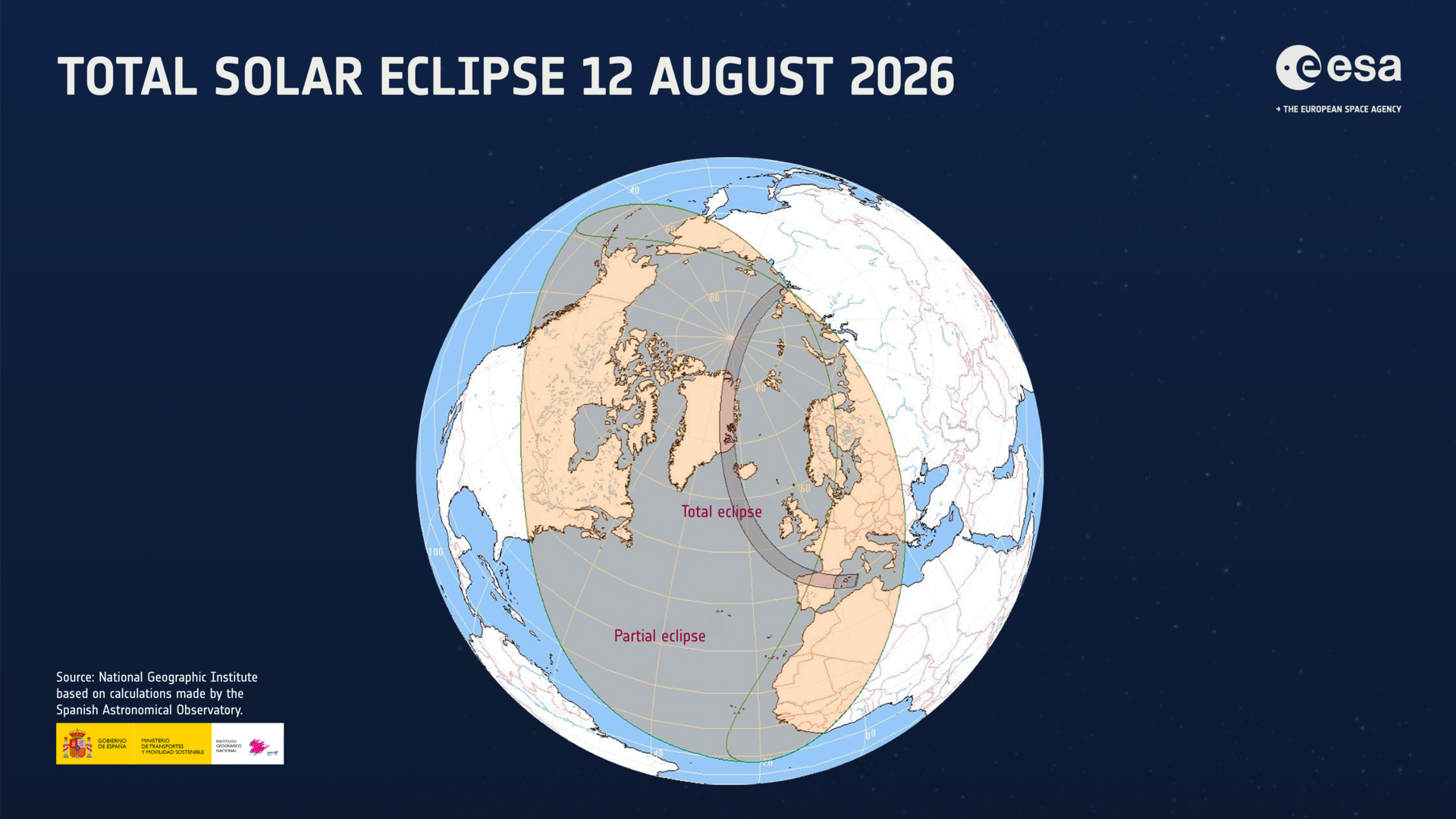
The European Space Agency is preparing a public science programme and international live coverage for the total solar eclipse on 12 August 2026. In an announcement published on 23 July, ESA said the eclipse will bring scientists, engineers and astronomy experts together with the public in León, Spain, while viewers elsewhere will be able to follow the event online.
Where totality will be visible
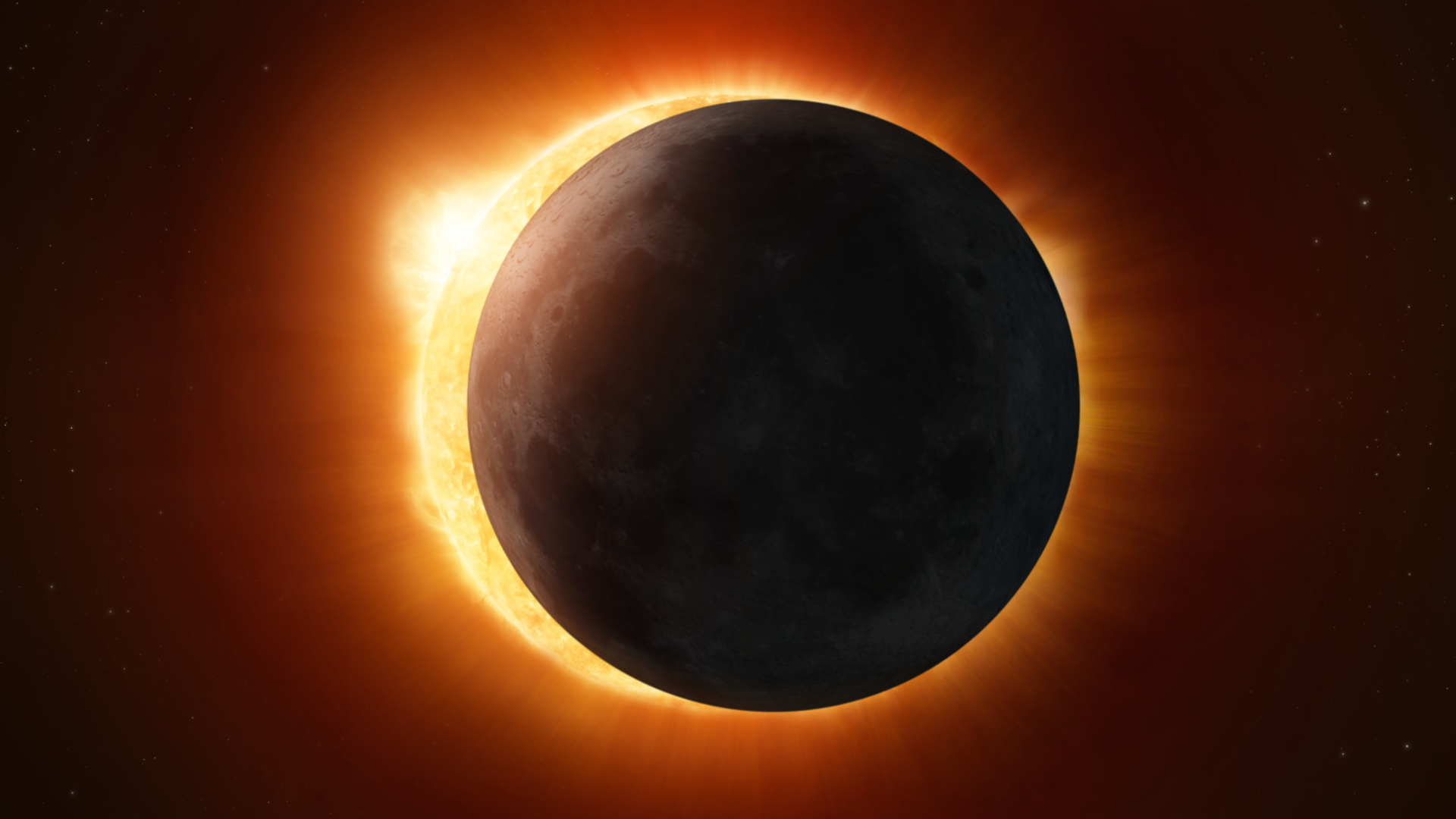
The path of totality will cross eastern Greenland, western Iceland, the northern half of Spain and a small area of northeastern Portugal. In those locations, the Moon will completely cover the visible disc of the Sun for a short period, producing the darkened conditions associated with a total eclipse. Most of the rest of Europe, as well as parts of northern Africa and North America, will see a partial eclipse instead.
ESA’s official global map shows the total and partial visibility zones across the Northern Hemisphere. The agency says the map was obtained from Spain’s National Geographic Institute and is based on calculations from the Spanish Astronomical Observatory. It is a guide to the eclipse’s geographic path, not a guarantee of clear skies or local viewing conditions.
A public science programme in León
ESA is organising a free public event at the Palacio de Exposiciones y Congresos de León in collaboration with the City of León and the University of León. The programme is designed to explain the science of eclipses through interactive activities, talks and live observations. Visitors will be able to experience totality alongside researchers and specialists who study the Sun and the wider space environment.
The choice of León reflects the importance of northern Spain to this eclipse. The region lies within the band where the Moon’s shadow will pass across the surface, giving observers an opportunity to witness totality directly. ESA describes the event as part of a broader effort to connect public engagement with European solar and space science.
ESA will also broadcast the eclipse
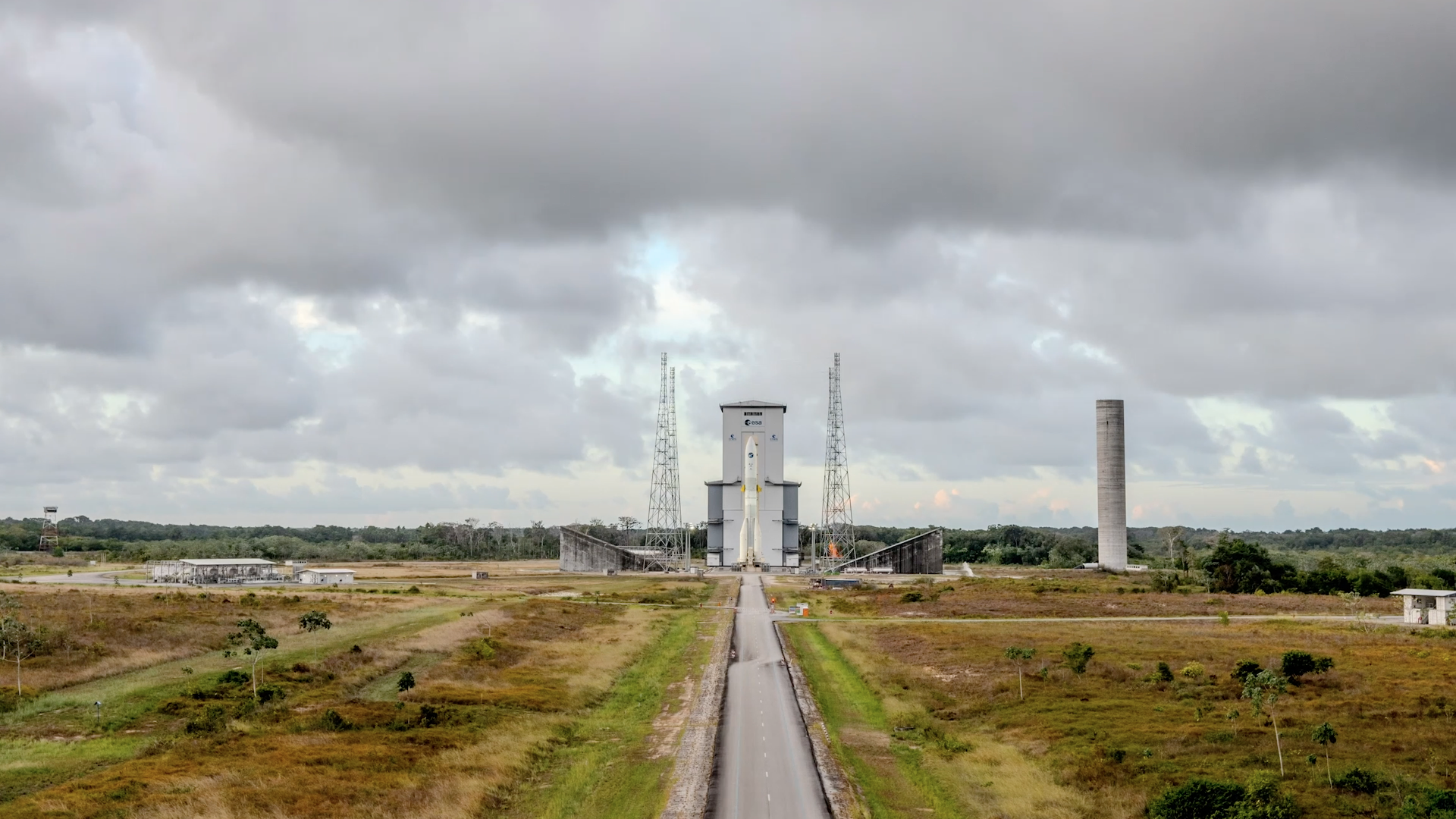
For people outside the path of totality, ESA will provide an English-language live broadcast from the Javalambre Astrophysical Observatory in Teruel. The facility is located within the band of totality, allowing the broadcast team to combine live views with explanations from experts. ESA says the programme will be available through ESA Web TV and YouTube.
The broadcast gives observers in areas experiencing only a partial eclipse a way to follow the event without confusing partial visibility with totality. It also creates a second route into the science: viewers can learn why the alignment of the Sun, Moon and Earth produces such different experiences across relatively short distances.
Why the eclipse matters to space science
A total solar eclipse temporarily blocks most of the Sun’s bright visible surface and makes the faint outer atmosphere, or corona, easier to see. ESA is using the occasion to highlight missions that study the Sun and its effects on Earth, including Solar Orbiter, Smile and Proba-3. Those missions represent different ways of examining the solar environment, from close observations of the Sun to research into how solar activity interacts with Earth’s magnetic surroundings.
The eclipse itself does not replace spacecraft measurements, but it provides a rare public demonstration of the geometry and physics that underpin solar observation. It also offers a clear reminder that the space environment is connected to conditions near Earth, where solar activity can affect technology and scientific instruments.
Eye protection is essential
ESA warns that regular sunglasses are not safe for viewing a solar eclipse. During the partial phases, observers should use certified solar eclipse glasses that meet the appropriate safety standards and keep them on while any part of the bright Sun remains visible. The only brief exception is the period of totality, when the Moon completely covers the Sun. Protection must be put back on as soon as the Sun begins to reappear.
ESA’s announcement makes the 12 August eclipse both a scientific event and a public-safety exercise. The official visibility map can help readers understand whether their location lies inside the path of totality, while the León programme and the English-language broadcast offer verified ways to follow the science. The safest approach is to plan around official information, use proper eye protection and treat totality as a precise phase rather than assuming that every view of the eclipse is safe.