The European Space Agency has announced a series of pre-launch briefings for MTG-I2, the next satellite in Europe’s Meteosat Third Generation weather-monitoring system. The announcement provides a timely look at what the mission is designed to deliver, while making clear that the satellite has not yet begun operational observations.
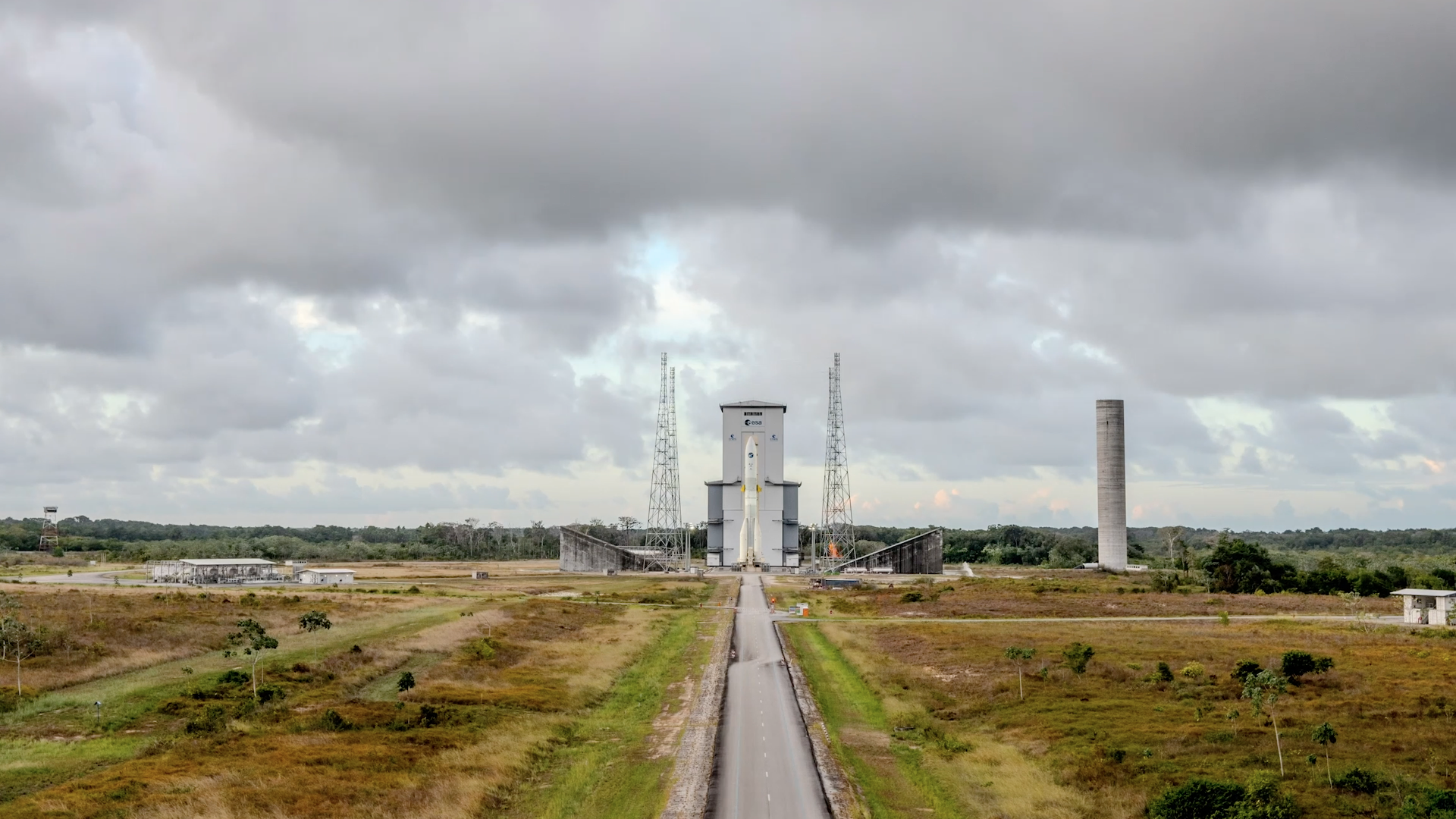
According to ESA’s official announcement, MTG-I2 is scheduled to launch on 27 August 2026 aboard an Ariane 6 rocket from Europe’s Spaceport in French Guiana. The mission would place the satellite into geostationary orbit, where it can observe the same region of Earth continuously as the planet rotates below it.
What ESA has announced
The immediate announcement concerns online media briefings planned for 19 August in English, French and German. ESA says the sessions will bring together representatives from the agency, Arianespace, Eumetsat, the UK Met Office and the satellite’s industrial partners. The English briefing is scheduled to cover the launch, the MTG programme and the scientific and operational reasons for adding MTG-I2 to the constellation.
That distinction matters. ESA has announced a planned launch and a briefing programme, not a successful deployment or a completed performance assessment. The satellite will need to launch, reach its intended orbit and complete commissioning before its data can be treated as part of routine forecasting operations.
A larger weather-observation system
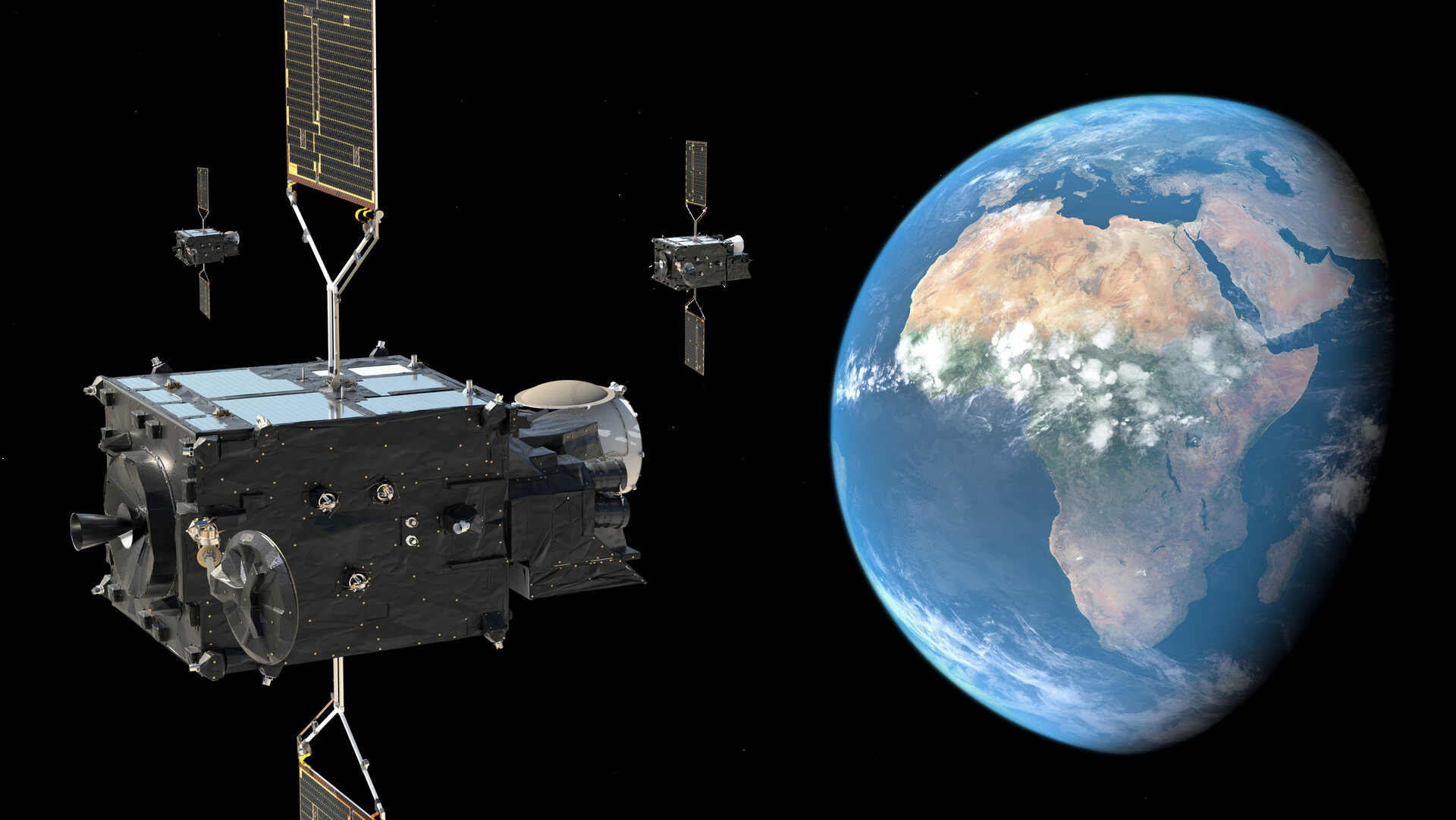
MTG-I2 is the third satellite to join the Meteosat Third Generation constellation for Eumetsat. ESA’s mission overview identifies the complete system as six satellites: four MTG-Imagers and two MTG-Sounders. MTG-I1 and MTG-S1 are already in orbit, while MTG-I2 is intended to extend the system’s observing capability.
The programme is designed to maintain continuity in geostationary weather observations for the next two decades. Its purpose is not limited to producing striking satellite images. The data are intended to support weather forecasting and climate monitoring across Europe and North Africa, with greater detail, frequency and volume than the previous Meteosat Second Generation system.
ESA says the fully operational MTG constellation is expected to produce at least 50 times more data than the earlier generation. That figure describes the planned constellation rather than a result already demonstrated by MTG-I2 in space.
Tracking storms and lightning
The MTG-Imager satellites carry two main instruments: a Flexible Combined Imager and a Lightning Imager. Together, they are designed to give forecasters more frequent information about rapidly changing atmospheric conditions.
The Flexible Combined Imager is intended to build detailed pictures of developing weather systems. ESA says it can scan the Earth as seen from geostationary orbit in about 10 minutes and scan the whole of Europe every 2.5 minutes. Those rapid repeat observations are especially relevant when cloud structures, convection and storm organisation are changing faster than traditional forecast cycles can capture.
The Lightning Imager adds a continuous view of lightning activity. From an altitude of about 36,000 kilometres above the equator, the instrument can monitor more than 80% of the Earth’s surface visible from its position. Lightning observations can help identify intensifying convective systems and provide another stream of evidence for severe-weather monitoring.
Why the launch matters for forecasting
ESA says the MTG data will support nowcasting, the short-range forecasting of weather over the next few hours, as well as improved numerical weather prediction. In practice, that means the mission is intended to supply more frequent observations for systems that are already developing, including fast-moving storm structures that can change significantly between conventional satellite scans.
The same observing continuity also matters for climate monitoring. A long-running geostationary record allows scientists and forecasting agencies to compare atmospheric conditions over time, although MTG-I2’s individual contribution will only become clear after launch and commissioning. The satellite is therefore part of a broader observing infrastructure rather than a standalone climate experiment.
A new destination for Ariane 6
The launch is also a milestone for Europe’s Ariane 6 programme. ESA describes MTG-I2 as the first Ariane 6 mission planned to reach geostationary orbit and the rocket’s ninth flight. The launcher will use two P120C-based solid-propellant motors for liftoff and carry the satellite on flight VA270.
Reaching geostationary orbit requires a different mission profile from placing satellites into lower orbits. The launch will therefore test Ariane 6’s ability to deliver a major meteorological spacecraft to one of the most important orbital regions for continuous Earth observation.
What happens next
The next confirmed milestone is the ESA media briefing on 19 August, followed by the planned launch on 27 August. After launch, MTG-I2 will need to be checked and commissioned before its instruments can contribute to operational services. Until that process is complete, claims about forecast improvements or new climate observations would be premature.
The verified takeaway from ESA’s announcement is narrower but significant: Europe is preparing to add another high-frequency weather-observation satellite to a constellation designed to strengthen severe-weather monitoring, forecasting and long-term environmental observation across a large part of the region.