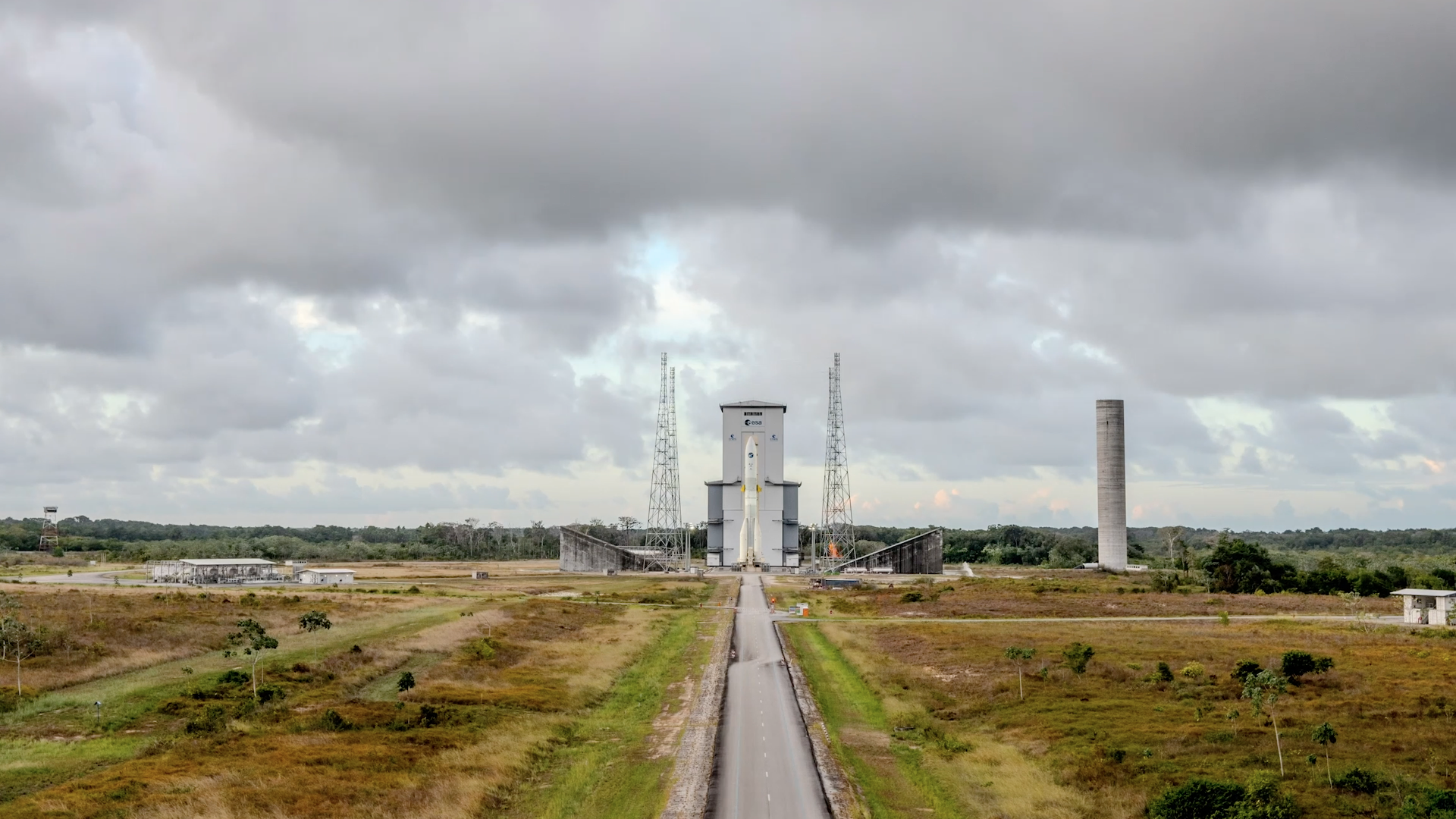
The European Space Agency is preparing the MTG-I2 weather satellite for launch on Ariane 6 from Europe’s Spaceport in French Guiana. In a July 2 announcement, ESA said the launch would take place no earlier than the last week of August. The agency did not publish a specific launch day, so the timing remains a target rather than a confirmed schedule.
MTG-I2 is the third satellite in Europe’s Meteosat Third Generation constellation. Its role is to supply more frequent and detailed observations for weather forecasting and climate monitoring across Europe and North Africa. The mission is being developed by ESA for EUMETSAT, which operates Europe’s meteorological satellite systems.
What ESA has announced
The upcoming flight will be Ariane 6’s ninth launch and its first mission to geostationary orbit. From roughly 36,000 kilometres above the equator, MTG-I2 will join two Meteosat Third Generation satellites already in orbit. ESA says the constellation is expected to generate at least 50 times more data than the previous Meteosat Second Generation system once it is fully operational.
That figure describes the volume of information produced by the constellation, not a guarantee that every forecast will improve by the same amount. The practical value will depend on how meteorological services process, combine and interpret the observations alongside other measurements and models.
Two instruments with different jobs
MTG-I2 will carry a Flexible Combined Imager and a Lightning Imager. The Flexible Combined Imager is designed to track rapidly changing weather systems. ESA says it can scan the full Earth disc in 10 minutes and observe Europe every 2.5 minutes. That faster repeat cycle is intended to help forecasters monitor the development of thunderstorms, heavy rainfall and other short-lived hazards.
The Lightning Imager will continuously detect lightning from geostationary orbit, both during the day and at night. ESA says the instrument can monitor more than 80% of the Earth visible from its orbital position. Continuous lightning observations can provide an additional signal about the growth and organisation of convective storms, especially when combined with radar, surface observations and other satellite data.
These capabilities matter because severe weather can evolve between conventional forecast updates. A satellite that revisits the same region more frequently can give forecasters a clearer sequence of changes rather than isolated snapshots. It can also support monitoring over areas where ground-based radar or dense observing networks are unavailable.
The satellite is already at the launch site
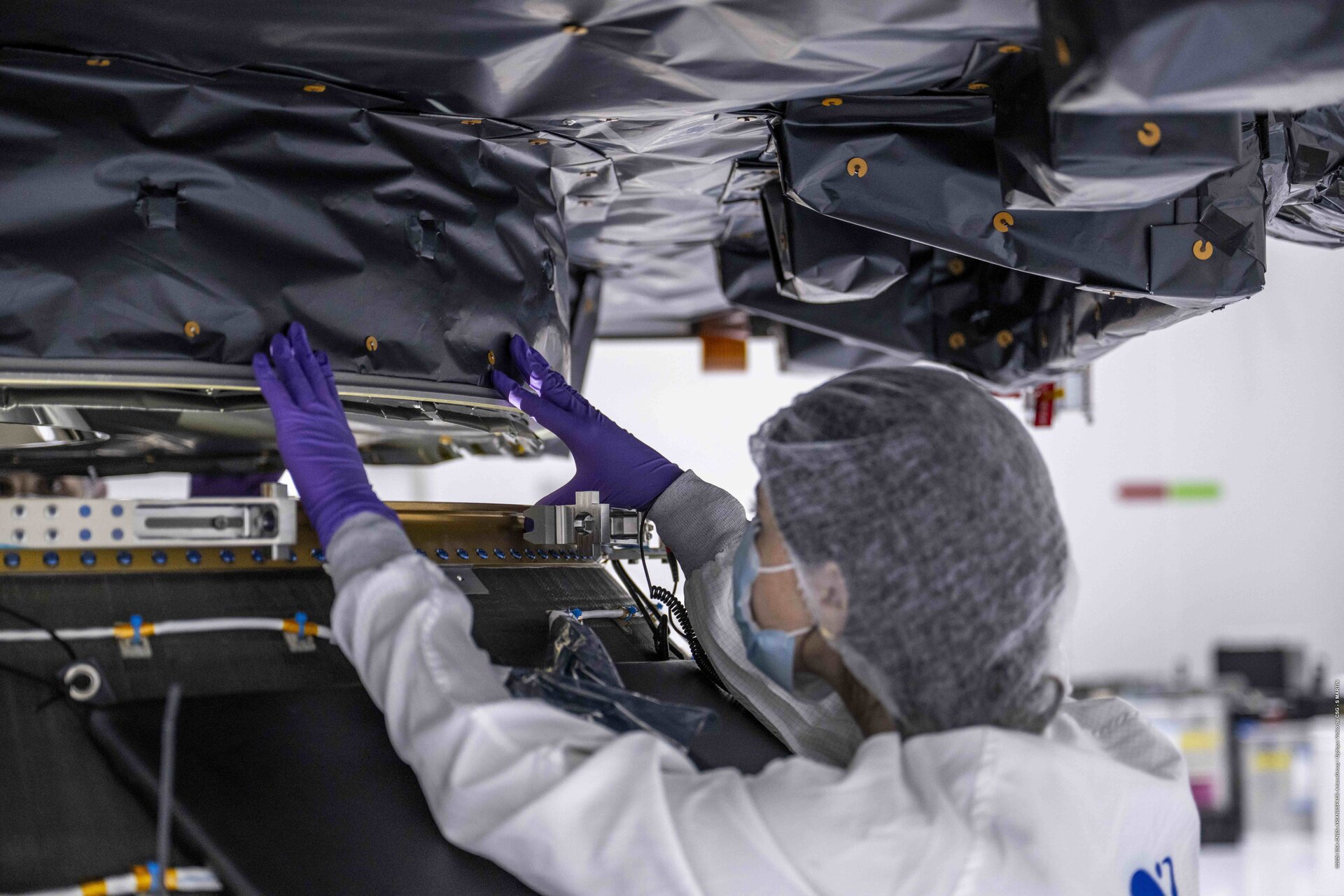
ESA’s July 16 update showed MTG-I2 undergoing a fit check with its launch vehicle adapter at Europe’s Spaceport. The procedure mounts the satellite and adapter in their flight configuration to verify that the mechanical, electrical and procedural interfaces work together before launch.
ESA said the fit check was part of the testing and inspection campaign that began after MTG-I2 was removed from its protective casing in early July. The satellite must still complete the remaining launch preparations, and the agency’s earlier announcement advised media to allow for a possible 24-hour postponement. No final launch date was provided in the material reviewed for this report.
Why the announcement matters
MTG-I2 is not a consumer product or a standalone warning service. Its significance is in the observing capacity it will add to Europe’s public weather infrastructure. More detailed imagery and near-continuous lightning measurements can help national meteorological services examine fast-moving storms, improve short-range forecasting and build longer climate records.
The data may also be useful beyond daily weather warnings. Repeated observations of cloud systems, atmospheric motion and lightning can support research into storm behaviour and climate variability. Because MTG-I2 is part of a constellation, its contribution will be assessed together with the existing satellites rather than in isolation.
For now, the verified position is straightforward: ESA is preparing MTG-I2 for an Ariane 6 launch no earlier than the final week of August, and the satellite has reached the launch-site testing phase. Until ESA publishes a firm date and confirms the mission’s operational status after launch, claims about immediate forecast improvements or full service availability would go beyond the official announcement.