
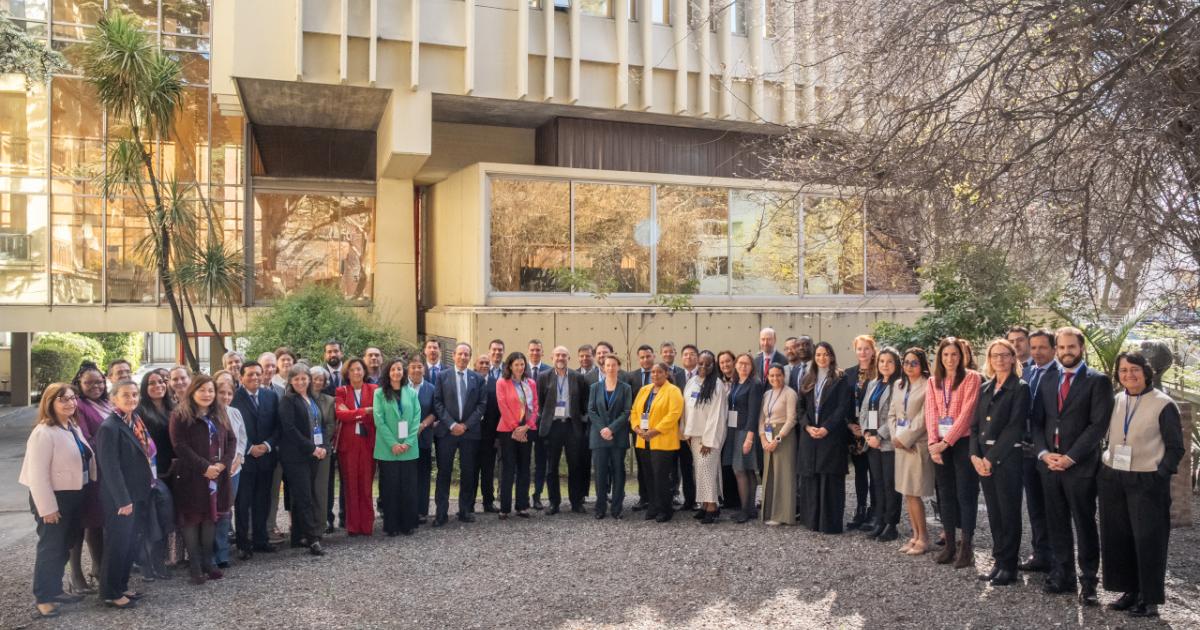
European Union and CELAC officials have agreed on practical steps to move joint research and innovation plans forward after a two-day meeting in Montevideo, Uruguay. The 10th Senior Officials Meeting of the CELAC-EU Joint Initiative on Research and Innovation took place on September 8 and 9, 2026, according to the European Commission’s account of the meeting.
More than 50 senior officials from 15 EU member states and 23 CELAC countries took part. The meeting brought representatives from the European Union and countries across Latin America and the Caribbean together to review progress in bi-regional cooperation and define the next phase of their shared research agenda.
Climate and energy remain central to the agenda
One of the thematic working groups covers climate change, environmental sustainability and the energy transition. Its remit links the partnership to research questions that affect how participating countries understand environmental change, build scientific cooperation and plan future energy systems.
The meeting did not announce a completed climate intervention or a new scientific result. Its immediate purpose was to improve coordination between the institutions involved in research and innovation. That distinction matters: the conclusions set out a framework for progressing shared priorities, but they do not yet demonstrate a measurable environmental outcome.
Action plans now need support
Officials agreed on practical measures to support implementation of the working groups’ action plans. They also committed to mobilising available funding and investment opportunities. In effect, the decision gives the groups a clearer task beyond reviewing cooperation: their plans must now be connected to activities capable of receiving institutional and financial support.
That connection is the main practical test for the agreement. Shared priorities can remain at the level of coordination unless participating institutions turn them into supported research and innovation activities. The conclusions create a route for that work, while leaving its eventual scale and results dependent on implementation.
What the conclusions change
The approved conclusions reaffirm the EU’s and CELAC countries’ commitment to deepening cooperation in research and innovation. They keep climate change, sustainability and the energy transition within the partnership’s active agenda and give the working groups an implementation role tied to existing financing and investment possibilities.
For researchers and public institutions involved in the EU-CELAC partnership, the next meaningful step is to translate the action plans into supported activities. For readers outside those institutions, the immediate consequence is more limited but clear: Montevideo produced a coordination decision, not a new climate project, a measured improvement in environmental conditions or a change in energy policy.
The meeting therefore marks progress in organising future cooperation rather than a finished policy outcome. Its value will be determined by whether the agreed measures lead to funded work and concrete results across the participating countries.